11211 Neeshaw Dr, Houston, TX 77065
TX-7

Test Data

Home›TX-7›Test Data

The Tidewater Study

Oil Analysis On Two Tugboat Engines

This refers to the addition of TX-7 Engine Treatment (Original) and the related reduction in wear metals. The oil analysis and wear metal testing was performed at Analysts, Inc. in Sugar Land, Texas, where Polymer Dynamics and Tidewater Marine tested two engines on a monthly basis: the Darlene Tide and the Mary Tide. Both are tugboat EMD engines with a history of overheating.

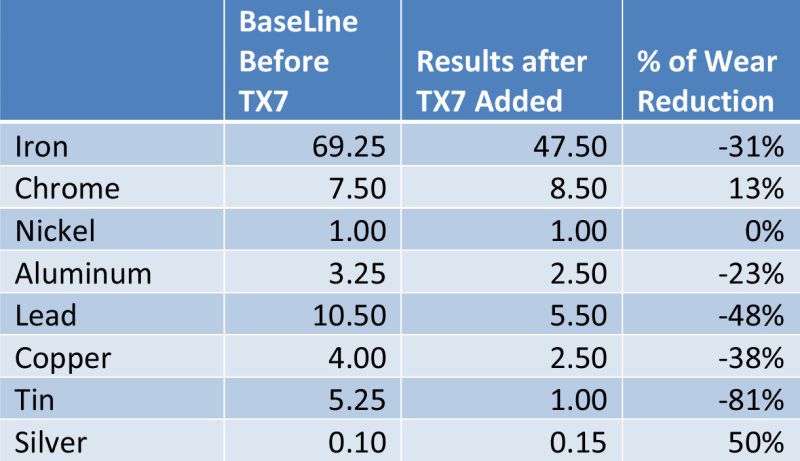
Results are shown in parts per million and are accurate to within half of one percent. The baseline readings are an average of the three samples taken before TX-7 was added.

How To Read It

1. Engine components and internal parts will last longer, compared with the higher levels of wear metals in the engine oil beforehand.

2. Reduction of down time and mechanical repairs.

3. Not shown here are the improved fuel consumption figures and lower operating temperatures, which were present but, by design, were not what this test set out to measure.

The Results

Reduction Of Wear Metals

An examination of the pertinent wear metals, using the figures from the Spectrochemical Analysis, reveals the following reductions.

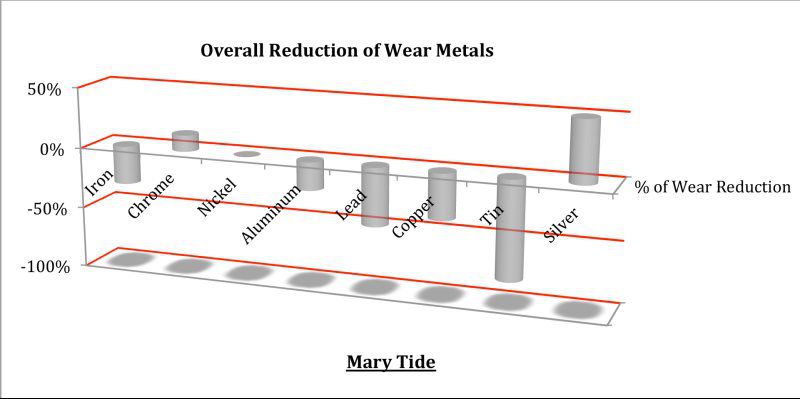
Chart, overall reduction of wear metals with TX7
Overall reduction of wear metals, Mary Tide.
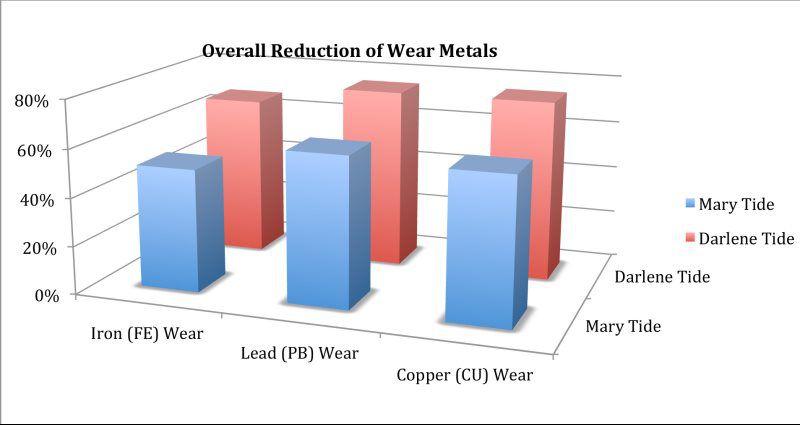
Chart, overall reduction of wear metals across two oil analysis reports
Overall reduction of wear metals across both engines.
Oil analysis table, wear metals in ppm before and after TX7
Oil analysis table: wear metals in parts per million, baseline against post-treatment, with the percentage reduction.
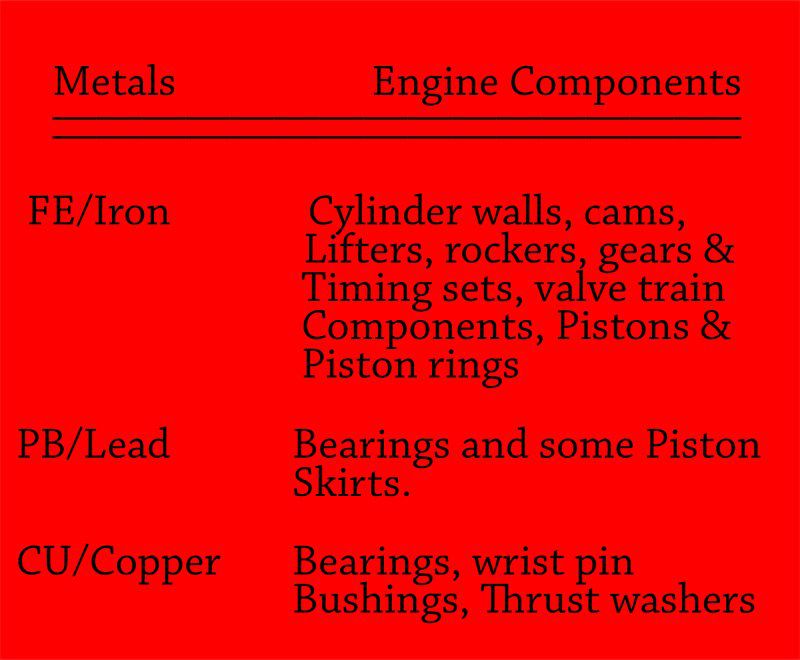
Reference table, wear metals and the engine components they come from
Reference table: which wear metal comes from which engine component.
Why Wear Metals

What The Numbers Actually Measure

Components that see reduced wear and extended life are defined by the wear metals they give up. Those metals disperse into the engine oil, so higher levels in used oil mean greater wear.

A reduction in wear metals under Spectrochemical analysis proves better lubrication and less friction, and friction is the main cause of wear in an engine.

The Final Results

What The Port Engineer Added

TX-7 should be reintroduced at each oil change interval.

The Port Engineer at Texas City, Texas, Mr. Larry E. Plunk, relayed related findings: oil pressure increased and operating temperatures decreased. That was not part of the study and there is no data behind it here, but he noticed it and it warranted mention.

Mary Tide results provided by Analysts Inc. report #60163, averaged over three months, tested once per month. Darlene Tide results provided by Analysts Inc. report #59632, on the same basis. The written and video reviews and testimonials come from owners rather than laboratories.
Run The Test Yourself

Add TX-7 at your next oil change and send a sample for analysis. The numbers are the point.