11211 Neeshaw Dr, Houston, TX 77065
Industrial

Technical Data

Home›Industrial Coatings›Technical Data

The Numbers

Coefficient of Friction

Coefficient of friction is a much misunderstood term, and it depends on pressure, speed and temperature. The friction of PolyDyn coatings is relatively constant over a range of increasing pressure from .2 psi to 400,000 psi, and from liquid hydrogen temperatures of -420°F to +550°F. As speed increases the coefficient increases, but it stays well below, meaning better than, the values of other dry film lubricants.

Because of the film transfer of PTFE from the coating to the mating part, frictional values are similar for all mating materials, as long as the surface finish is 50 rms or better.

Frictional oscillation, the stick-slip and chatter you get with other coatings, is virtually non-existent. It is this ability to perform uniformly across a wide range of conditions that separates these coatings from other dry film lubricants.
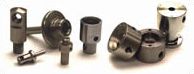
Engine components with PolyDyn bronze and gold coating finishes
Components with PolyDyn bronze and gold coating finishes.
Specifications

Published Properties

Every figure on this page is one PolyDyn publishes. Anything not listed here, ask us rather than assume: tell us the application and we will tell you what the coating does in it.

Low friction

As low as 0.02.

Wear resistance

Holds up even under extreme pressure.

Corrosion resistance

In most chemical environments.

Weather resistance

Against sunlight, saltwater and road chemicals.

Temperature range

-420°F to +550°F.

Pressure range

Friction stays relatively constant from .2 psi to 400,000 psi.

Curing schedule

Flexible, from ambient to 550°F.

Overbuild

Engine coatings are applied to leave a .0002″ to .0007″ overbuild on the surface.

Color range

Wide. Color code your product.

Pliability

Bends freely and repeatedly without breaking.

Machineability

Apply multiple coats, most formulations, and mill to specification.

Adhesion

Excellent, to most metals, plastics, ceramics and wood, and to itself.

In Service

Fasteners, Pipelines and Petrochemical Equipment

A dramatic example of these coatings in service is the fasteners used on pipelines and related petrochemical equipment. PolyDyn properties improve their function and extend their lifespan.

Fastener nuts do not become frozen onto the stud shafts, and corrosive deterioration is halted. Installation and removal is simplified, because the coating reduces make-up and break-out torque.

PolyDyn coatings differ from traditional fluorocarbon coatings in one important way: they are composite materials. Fluoropolymers with the lowest coefficient of friction known are combined in a matrix with modern high temperature organic polymers. Together these form plastic alloys with properties neither has alone. That is the same matrix described on the industrial coatings page.

Need a Spec We Have Not Published?

Tell us the part, the temperature, the pressure and the chemistry it sits in. We will tell you what we would specify.