
TFE Against TFE, Not Metal Against Metal
TX-7 works by burnishing TFE particles into the irregularities of the metal surfaces. Where you once had metal against metal, you now have TFE against TFE. That reduces metal interface friction and heat build up and increases efficiency.
TX-7 can be used in any engine, new or old, including diesel engines. In a new engine, add it as soon as the recommended break in period has been achieved, usually 4,000 to 7,000 miles or at the first recommended oil change. In an older engine, add it during any routine oil change. It restores power in older, higher mileage engines and reduces oil consumption.
TX-7 is recommended at every oil change, at a ratio of 80 to 20: 80 percent good quality motor oil to 20 percent PolyDyn TX-7 Engine Treatment or TX-7 High Mileage Engine Treatment.
It Will Not Clog Anything
Only excessive and constant rubbing will cause TFE erosion to occur.
Unlike other engine treatments, TX-7 particles are ground to a fraction of a micron, which lets them pass through any filtration system. Other engine treatments get trapped in oil filters and never reach the engine.
PolyDyn’s suspension process keeps the TFE particles in suspension so they will not build up on themselves in critical areas. It will not clog oil lines, oil ports or oil filters, and the TFE bonding takes place at friction wear points regardless of engine temperature. More on that in the TX-7 FAQ.
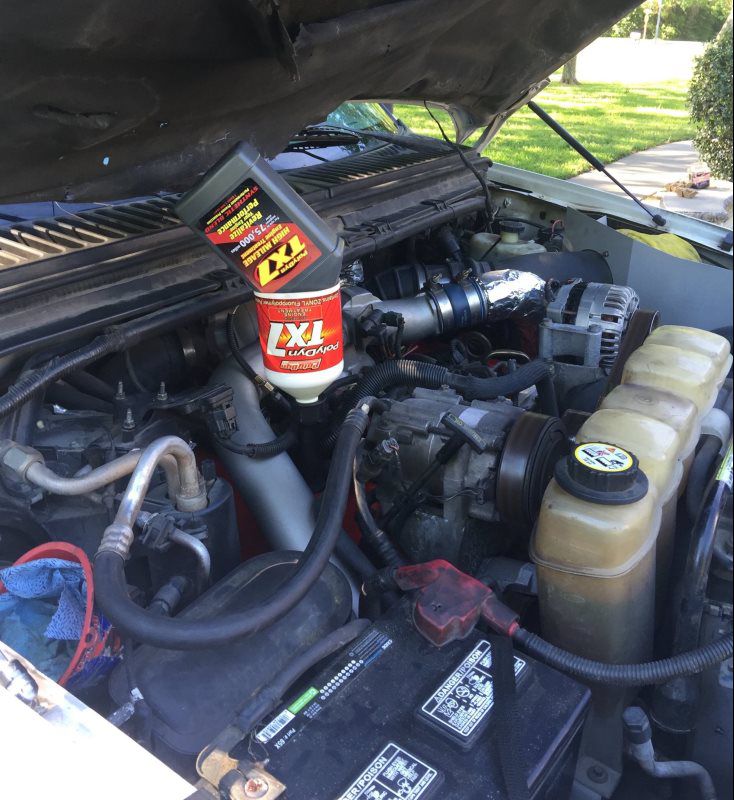
Two Things TX-7 Changes
1. Better Oil Film Strength
Under adverse conditions: stop and go traffic, or high ambient temperatures on hot days, when the engine is stressed.
2. Wear Reduction
Achieved by burnishing the polymer onto the moving parts. As the engine runs, the polymer attaches itself to high friction contact points and surface voids, and metal to metal contact is greatly reduced. Oil analysis of vehicles running TX-7 shows a reduction of soluble wear metals between 50 and 90 percent, which is what the test data page covers.
Those reductions add up to a large increase in the life of the moving components of the engine. The other benefit is efficiency: less friction between moving parts keeps the oil film in place and lets the engine run smoother with less energy wasted. An engine that uses less energy to move the vehicle often shows an improvement in fuel economy.
Much of what we know about TX-7 came out of the racing community, where engines run at very high speeds under high load, high temperature and real demands on oil film strength. Those results transferred straight to road cars and trucks. Some of the biggest names in stock car and drag racing have run it: NASCAR, NHRA, IHRA, World of Outlaws, SCCA, IndyCar, monster trucks and boat racing. The written and video reviews and testimonials come from owners rather than teams.